

.avif)


Numbness, tingling, burning pain, and muscle weakness can all point to nerve damage. But if these symptoms started after a car crash, fall, or another accident, you may hear two different terms from your doctors: radiculopathy and neuropathy.
With radiculopathy vs neuropathy, the conditions affect nerves in different locations. Radiculopathy starts at a nerve root near the spine, while neuropathy involves peripheral nerves elsewhere in the body.
Because the symptoms overlap, doctors often use imaging, physical examinations, and nerve testing to determine what is causing them.
If your nerve injury was caused by someone else’s negligence, Thorsnes Bartolotta McGuire can investigate the accident and the extent of your injuries. Call (619) 236-9363 or contact us online for a free consultation.
Radiculopathy occurs when a nerve root near the spine is compressed, irritated, or damaged. Where that happens determines where you feel the symptoms.
Cervical radiculopathy begins in the neck and can cause pain, numbness, tingling, or weakness in the shoulder, arm, hand, or fingers. Lumbar radiculopathy begins in the lower back and affects the buttocks, legs, or feet. Sciatica is one familiar form of lumbar radiculopathy.
Herniated discs, spinal stenosis, bone spurs, and spinal injuries can all put pressure on nerve roots. After an accident, neck or back pain may be the first complaint. Radiating pain or numbness can develop as well.
The radiculopathy signs and symptoms vary based on the nerve root involved. You might experience:
- Sharp, burning, or electric pain traveling down an arm or leg;
- Numbness or tingling in the hands, fingers, legs, or feet;
- Muscle weakness;
- Changes in reflexes; or
- Pain that increases with certain movements, coughing, or sneezing.
The location of those symptoms helps doctors identify which nerve root may be affected. Weakness in certain fingers, for example, can point to a different area of the cervical spine than symptoms affecting another area of the hand.
For an injured person, these problems can make it difficult to grip objects, lift, type, drive, walk, climb stairs, or perform physical work.
Neuropathy involves damage to peripheral nerves, which carry signals between the brain and spinal cord and the rest of the body.
Diabetes is one common cause, but neuropathy can also result from trauma. A nerve may be stretched, compressed, crushed, or severed in an accident. Infections, autoimmune diseases, vitamin deficiencies, certain medications, and other medical conditions can cause neuropathy as well.
Neuropathy signs and symptoms often include burning pain, numbness, tingling, sensitivity to touch, muscle weakness, cramping, and problems with balance or coordination. The symptoms depend on the type and location of the damaged nerves.
The difference between radiculopathy and neuropathy is easiest to see by comparing where each condition begins.
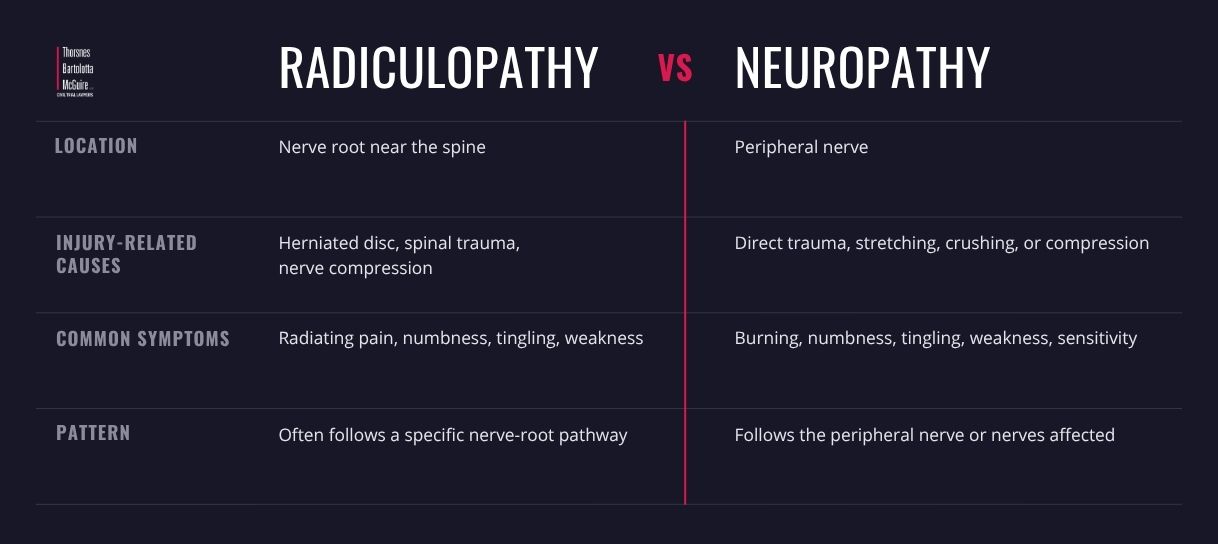
This is why neuropathy vs radiculopathy can be difficult to distinguish based on symptoms alone. Numbness in your hand might come from a nerve root in your neck or an injured nerve in your arm.
Your doctor may check your strength, sensation, reflexes, range of motion, and the areas where you feel pain or numbness. Your medical history also provides information about when the symptoms started and whether you had similar problems before the accident.
An MRI or CT scan can identify spinal injuries such as a herniated disc. Electromyography, or EMG, measures electrical activity in muscles. Nerve conduction studies measure how signals travel through your nerves.
These records can also become evidence in a personal injury claim. They can document the location of the injury, the symptoms reported after the accident, treatment received, and any ongoing neurological problems.
If nerve pain, numbness, or weakness is interfering with your work or daily life after an accident, call Thorsnes Bartolotta McGuire at (619) 236-9363. We can review what happened, your medical treatment, and the losses you have experienced.
An accident can cause radiculopathy by injuring the spine or causing a disc to press against a nerve root. Trauma can also damage a peripheral nerve directly.
Proving that connection becomes harder when symptoms don't appear immediately or the injured person has a history of back problems, diabetes, neuropathy, or another condition affecting the nerves.
Medical records from before and after the accident can show whether your symptoms changed. Doctors may also consider imaging results, neurological testing, physical examinations, and the type of trauma involved.
A herniated disc on an MRI can explain radiculopathy when the disc is pressing on the nerve root associated with your symptoms. But the MRI has to be considered with the rest of your medical findings.
Disc abnormalities can exist before an accident without causing noticeable symptoms. An insurance company may point to degeneration or an older spinal condition and argue that the crash didn't cause your current problems.
Your treatment history can show the difference between your condition before and after the accident. New radiating pain, weakness, numbness, additional treatment, or new physical restrictions can all be relevant.
A previous back condition doesn't prevent you from suffering a new injury or experiencing worse symptoms after an accident.
Suppose you had occasional lower-back pain before a collision but never had numbness down your leg or weakness in your foot. If those symptoms began after the crash, your doctors may need to determine whether the accident aggravated an existing condition or caused a separate injury.
Insurers often review prior medical records in nerve injury claims. Comparing those records with your condition after the accident can show what actually changed.
Nerve injuries range considerably in severity. Mild compression or irritation may improve with treatment, while significant nerve damage can cause chronic pain, muscle weakness, loss of sensation, or permanent limitations.
Treatment can involve physical therapy, medication, injections, surgery, assistive equipment, or ongoing pain management. Someone with permanent weakness or numbness may also have difficulty returning to a job that requires lifting, standing, driving, typing, or fine motor skills.
When neurological damage is severe, future medical needs and lost earning capacity can account for a substantial amount of the claim. Our article on the lifetime costs of catastrophic injuries explains how those future expenses can accumulate.
Neurological symptoms can also occur with other serious trauma, including a brain injury.
Nerve damage isn't always visible on an X-ray or obvious to someone watching you walk into a room. That can give insurers several issues to challenge.
They may question whether:
- The accident caused your symptoms;
- You had the same symptoms beforehand;
- Your imaging matches your diagnosis;
- Your treatment was necessary;
- The injury prevents you from working; and
- You will need future treatment or surgery.
The medical documentation behind a radiculopathy vs neuropathy diagnosis can answer many of those questions. Test results, physician findings, treatment records, and your medical history show more than a description of pain alone.
Severe nerve damage can also qualify as a catastrophic injury when it results in permanent disability or major loss of function. If the injury is expected to affect you for years, an attorney handling a catastrophic injury claim can work with your doctors and other experts to calculate future medical expenses, lost earnings, and other losses.
When Numbness and Tingling Aren't Minor Symptoms
Numbness and tingling might not sound as serious as a broken bone or visible wound. The effect of nerve damage can tell a very different story.
You might drop objects because your hand has lost strength. Your leg might give out unexpectedly. Burning pain might keep you awake at night. Sitting at a desk, standing through a shift, or driving might become difficult.
Those details show how the injury affects your daily life and what you have lost because of it.
Thorsnes Bartolotta McGuire represents people with serious injuries involving complex medical evidence and long-term physical limitations. Our attorneys have recovered more than $2 billion for clients in cases against insurance companies, corporations, and other defendants.
Call (619) 236-9363 or contact us online for a free consultation. Tell us what changed after the accident and what you're dealing with now.