

.avif)


You own a business and need to pay for groceries, so you use the company debit card. Or maybe you pay a business expense from your personal checking account because it is easier. You plan to sort it out later.
Then it happens again.
Mixing money this way is called commingling of funds. In simple terms, it means money that should be kept separate gets mixed together. If you are wondering what is commingling of funds, the most common example is a business owner treating a company bank account like a personal one.
It can also happen when business partners mix their own money with company funds or money moves between related businesses without anyone clearly documenting why.
Why does this matter? Once money is mixed together, it can become difficult to answer some immediate questions:
- Whose money is this?
- Was this payment a business expense or a personal one?
- Was an owner allowed to take this money?
- Does someone need to pay it back?
- Is money actually missing from the business?
Those questions become more serious when business partners are fighting, an owner suspects money is being taken from the company, or a lawsuit has been filed.
At Thorsnes Bartolotta McGuire, we represent San Diego businesses and business owners in disputes involving company money, ownership, contracts, and financial misconduct. If you are concerned about money being taken or improperly moved from a business, call (619) 236-9363 or contact us online for a free consultation.
Commingling can sound like an accounting term until you see how easily it happens.
Say you own a small construction company. Over time, you start using the company debit card for personal expenses. Dinner goes on the company card. So does your family cell phone bill. You pay your mortgage from the business account one month because most of your available cash happens to be there.
Meanwhile, you occasionally pay company expenses from your personal credit card.
Eventually, your finances are so mixed that someone looking at the bank statements cannot easily tell which expenses belong to you and which belong to the company.
That is the simplest way to understand the commingling of funds meaning.
It can happen in larger companies, too. A business partner might transfer company money into another business they own, or related companies may transfer money back and forth without recording whether those transfers are payments, loans, or something else.
Clear records make it much easier to establish what each transaction was for and whether it was authorized.
Commingling can erase the clear financial trail a business needs. When business and personal transactions are kept separate, it is relatively easy to see what happened to the company's money. Mix them together for several years, and figuring out who paid for what becomes much harder.
That can create problems when you need to:
- Prepare or verify financial statements,
- Determine how much money an owner took from the company,
- Resolve a disagreement between business partners,
- Sell or dissolve the business,
- Respond to a lawsuit,
- Determine whether someone misused company assets, or
- Show that the business operates separately from its owners.
Suppose you and your partner each own 50% of a company. You discover that your partner has been paying personal bills from the company account for three years. Your partner says those payments were legitimate owner distributions.
Were they?
The answer may depend on the company's agreements, accounting records, how previous distributions were handled, and whether your partner had authority to make them.
A poorly documented account can suddenly become evidence in a much larger business dispute.
Is commingling of funds illegal? There is no single answer that covers every situation.
Accidentally paying for lunch with the wrong debit card is very different from deliberately moving company money into a personal account and hiding it from your business partners.
Some people also have specific legal duties to keep money separate. California attorneys, for instance, generally must keep funds belonging to clients or other people in designated trust accounts rather than mixing them with their own funds.
In a business, legal concerns can arise when commingling involves:
- Taking company money without authorization,
- Concealing transfers from other owners,
- Using business assets for personal benefit,
- Failing to account for money entrusted to you,
- Violating a partnership or operating agreement, or
- Using control over company finances for personal gain.
What matters is why the money moved, who approved it, and whether someone benefited from the transaction.
A business owner may discover unusual withdrawals and suspect theft. The person who made the withdrawals may insist every transaction was legitimate.
Consider an owner who transfers $10,000 from the company into a personal account. That transfer could be:
- Salary,
- An owner distribution,
- Repayment of a loan,
- Reimbursement for business expenses, or
- An unauthorized withdrawal.
The bank statement alone may not establish which one occurred. Accounting entries, emails, tax documents, company agreements, and other records can help establish why the payment was made and whether the recipient was entitled to it.
Frequency can also raise questions. One unexplained payment may be a bookkeeping error. Dozens of unexplained transfers into an owner's personal account call for a closer examination.
Commingling Can Become a Serious Problem Between Business Partners
Business partners frequently divide responsibilities. One handles sales. Another manages employees. Someone else controls the books and bank accounts.
Problems arise when the person controlling the money begins using company funds in ways the other owners did not authorize or understand.
You might notice:
- Money disappearing from the business account,
- Large reimbursements without receipts,
- Personal credit card bills paid by the company,
- Transfers to another business owned by your partner,
- Loans that were never discussed,
- Financial statements that do not match bank records, or
- A partner refusing to provide access to financial records.
At that point, concerns about disorganized accounting can turn into questions about whether company money was improperly used.
At Thorsnes Bartolotta McGuire, our attorneys represent businesses and owners in complex financial disputes. If you believe a partner, shareholder, officer, or another person has been using company money for their own benefit, call (619) 236-9363 or contact us online for a free consultation.
For owners of corporations and limited liability companies, another concern is the separation between the owner and the business.
If an owner treats corporate money as personal money, a creditor or another party in a lawsuit may point to that conduct as evidence that the owner and company were not operating as truly separate entities.
California courts consider multiple factors when deciding whether the protections of a business entity should be disregarded. Commingling business and personal funds can be one of the issues considered.
Regularly paying your mortgage, vacations, groceries, and other personal bills directly from the corporate account can leave you explaining those transactions later in litigation. Separate accounts and proper documentation help preserve a clear financial line between the owner and the company.
The penalty for commingling of funds can range from correcting improper bookkeeping to repaying substantial sums of money.
A dispute involving commingled funds could lead to:
- Repayment of money taken from the company,
- Financial damages,
- A court-ordered accounting,
- Restrictions on someone's access to company accounts,
- Claims involving breach of fiduciary duty or misuse of company assets, or
- Litigation over control, ownership, or management of the business.
Professionals who are required to keep entrusted money in separate accounts can also face disciplinary consequences for violating those rules.
Accidentally charging a personal meal to a business card presents a very different problem from secretly transferring company money into a personal account over several years.
Is Commingling the Same as Taking Money Without Authorization?
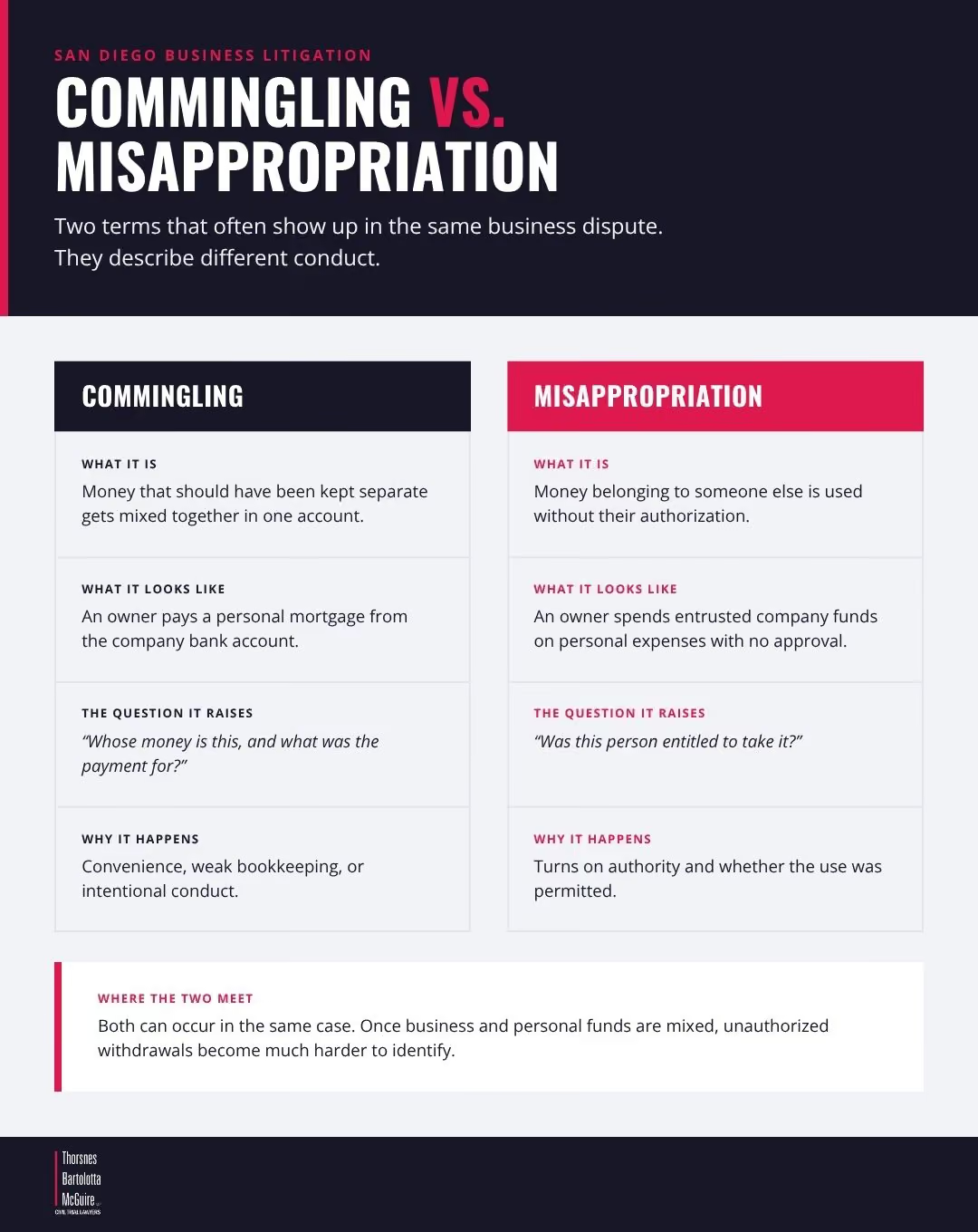
Commingling and misappropriation refer to different conduct, although both can occur in the same situation.
Commingling happens when funds that should have remained separate are mixed together. Misappropriation generally involves using money belonging to someone else without authorization.
Suppose someone responsible for holding $50,000 belonging to another person deposits it into an account that already contains their personal funds. The funds have been commingled. If that person then spends the entrusted money on personal expenses without permission, there is now a question of whether they also misappropriated it.
Separating the two issues helps determine what happened to the funds and what legal claims may be available.
You may see withdrawals you cannot explain, discover expenses that have nothing to do with the company, or find that your partner is reluctant to let you see the books.
Transactions that can warrant a closer look include:
- Payments for personal mortgages, rent, vehicles, travel, or credit cards,
- Transfers to an owner's personal bank account,
- Transfers to businesses owned by a partner or family member,
- Cash withdrawals without supporting records,
- "Reimbursements" with no receipts,
- Payments missing from the company's accounting system,
- Loans between the company and an owner with no written terms, and
- Large transfers made shortly before or after a business dispute began.
One unfamiliar charge may have an explanation. Repeated transactions without receipts, records, or a clear business purpose can signal that a broader review is needed.
Prevention starts with making it easy to identify where every dollar came from and why it left.
Maintain separate business and personal bank accounts and credit cards. When money legitimately moves between you and your company, document what it is.
If you put $25,000 of your own money into the company, record whether it is a capital contribution or a loan. If the company pays you, record whether the payment is salary, reimbursement, or a distribution.
Businesses with multiple owners can also establish rules for:
- Who can access company accounts,
- Who can authorize transfers,
- How much can be spent without another owner's approval,
- How owner distributions are approved,
- How expenses are reimbursed, and
- How often financial records are reviewed.
These safeguards give owners a clearer picture of the company's finances and make unexplained transactions easier to identify.
If you discover questionable transactions, start by figuring out exactly what happened.
Preserve the records you are legally entitled to access, including bank and credit card statements, accounting reports, invoices, receipts, tax documents, and emails discussing payments or transfers. Avoid deleting, changing, or trying to correct old records after a dispute has begun.
You will also want to determine whether money is continuing to leave the business. If questionable transfers are still occurring, the amount at issue could continue to grow.
A business litigation attorney can review the financial history, governing documents, and transactions in question. Complex cases may also involve accountants or financial experts who can trace money through multiple accounts.
Ultimately, you need answers to the questions that probably brought you here: Where did the money go? Was someone allowed to take it? And if they were not, what can you do about it?
Talk to Thorsnes Bartolotta McGuire About Questionable Business Transactions
Unexplained withdrawals, personal expenses charged to the company, or money moving between accounts can raise bigger questions about who had access to the funds and whether that person had the authority to use them.
Thorsnes Bartolotta McGuire has represented clients in San Diego and the surrounding communities since 1978. During that time, our firm has secured more than $2 billion in verdicts and settlements and handled cases involving substantial financial losses.
When a business dispute involves questionable transactions, our attorneys examine the financial records, agreements, and other evidence needed to determine what happened and what options are available to the client. Each case receives an individualized strategy based on the people, money, and business relationships involved.
If you believe a business partner, shareholder, officer, or another person has commingled or improperly used company funds, call Thorsnes Bartolotta McGuire at (619) 236-9363 or contact us online for a free consultation.